
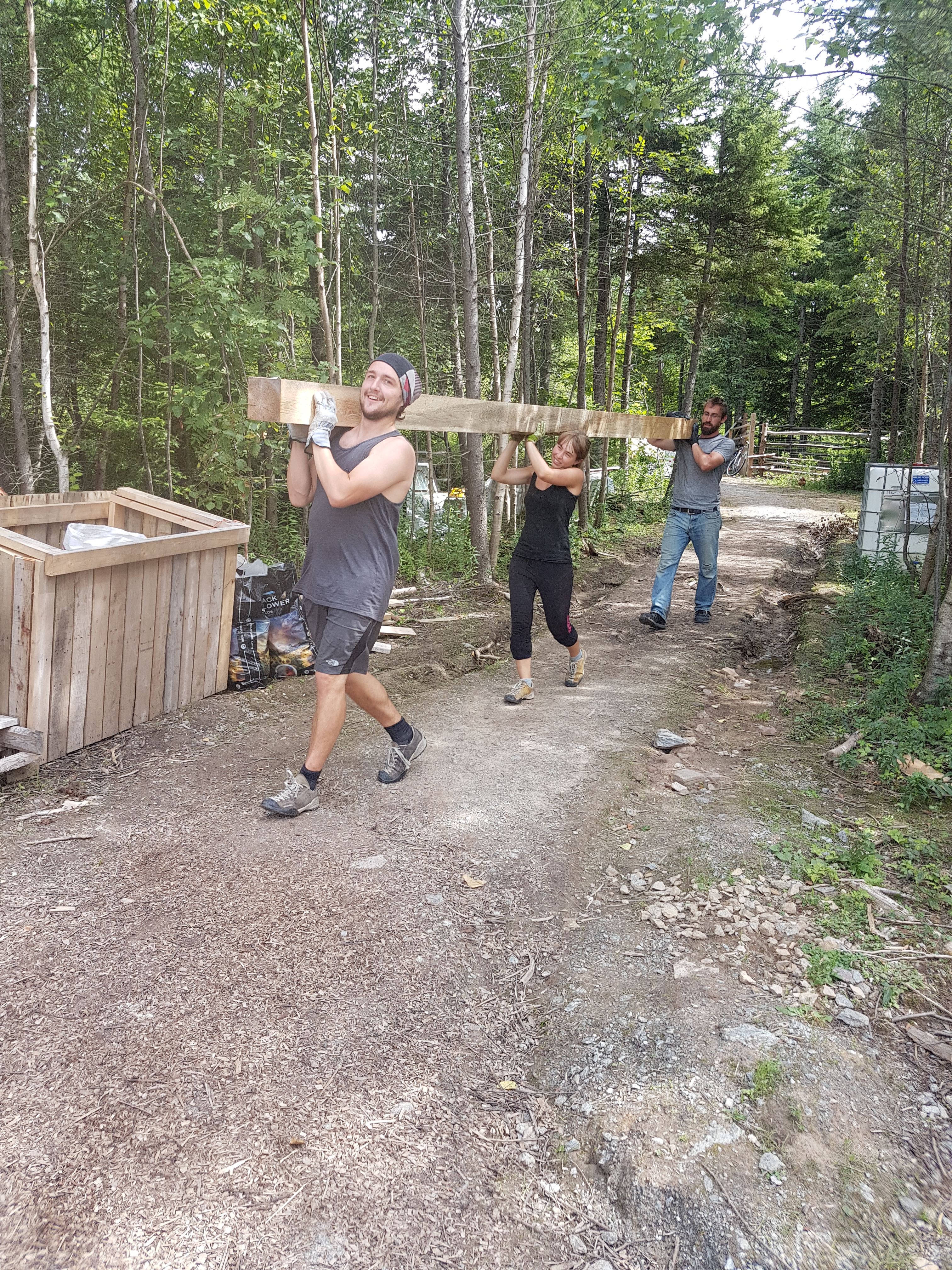
We have welcomed many people over the years and are continually evolving how we welcome and host those curious about permaculture, homesteading, small-scale farming and connecting with nature. For the 2024 season, we are inviting those interested in such a journey to join us for a learning adventure to share what we know with others, engage in meaningful conversations, and learn from the skills and gifts others bring to the farm. Without the help of volunteers, apprentices and community members, we could not be where we are today.
We invite those interested in such an experience to join us this 2024 season for a one or two week stay. From our experience, we find that this time gives an overview of the land, the farm, and the forest in all that they have to offer. You will be connected to the food that is grown here while being surrounded by the forest that offers mysterious reflections, and at the end of the day, you are in a community of others, wild and human, that support you in unexpected ways.
We also invite longer stays of more than two weeks, which can offer a much deeper dive into the workings of the farm and opportunities to connect more intimately with the land. For those interested in such an adventure, we require a more in-depth conversation to explore intentions for an extended visit. In the past, we have hosted apprentices with a three month stay which for those who are really interested in learning more through such an experience, allows for a much more holistic understanding of what it means to live off-grid, immersed in permaculture by doing and connecting even more personally with the wild community. Longer stays also allow for exploring creativity, developing a craft, or taking on a project that can facilitate core learning objectives. We would love to hear your ideas, passions and ways we could facilitate a longer learning experience this season here at Twisted Roots Farm.
Some of the tasks and projects you could be involved in while at our farm include:
- daily animal routines (feeding, watering, milking, egg collection)
- electric fence maintenance
- goat wanders in the forest – yup, it’s just a fun as it sounds!
- planting, weeding, transplanting, watering, moving high tunnels
- firewood collection, splitting, stacking
- harvesting of animals and vegetables
- compost systems, including garden and humanure
- farm stand management and customer interaction
- seasonal building projects
- bandsaw milling and wood products
- assisting with workshops and educational offerings
- …and whatever else arises during your stay!
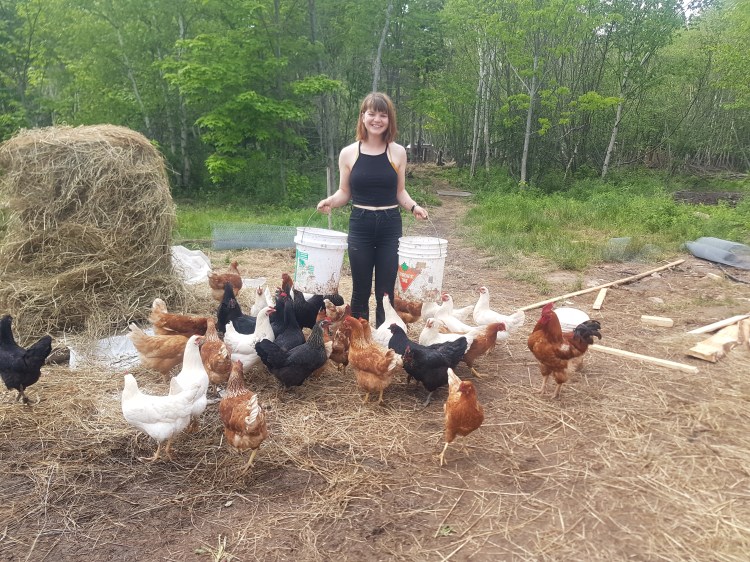
Chicken Feeding Time 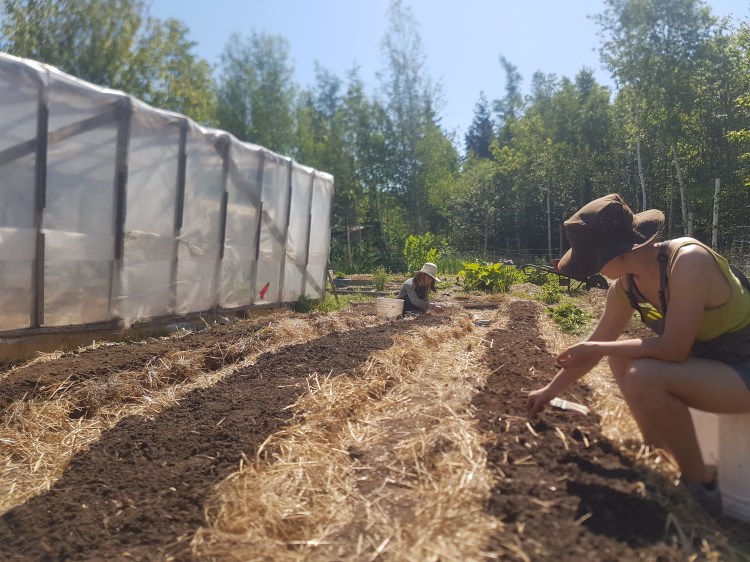
No Till Permaculutre 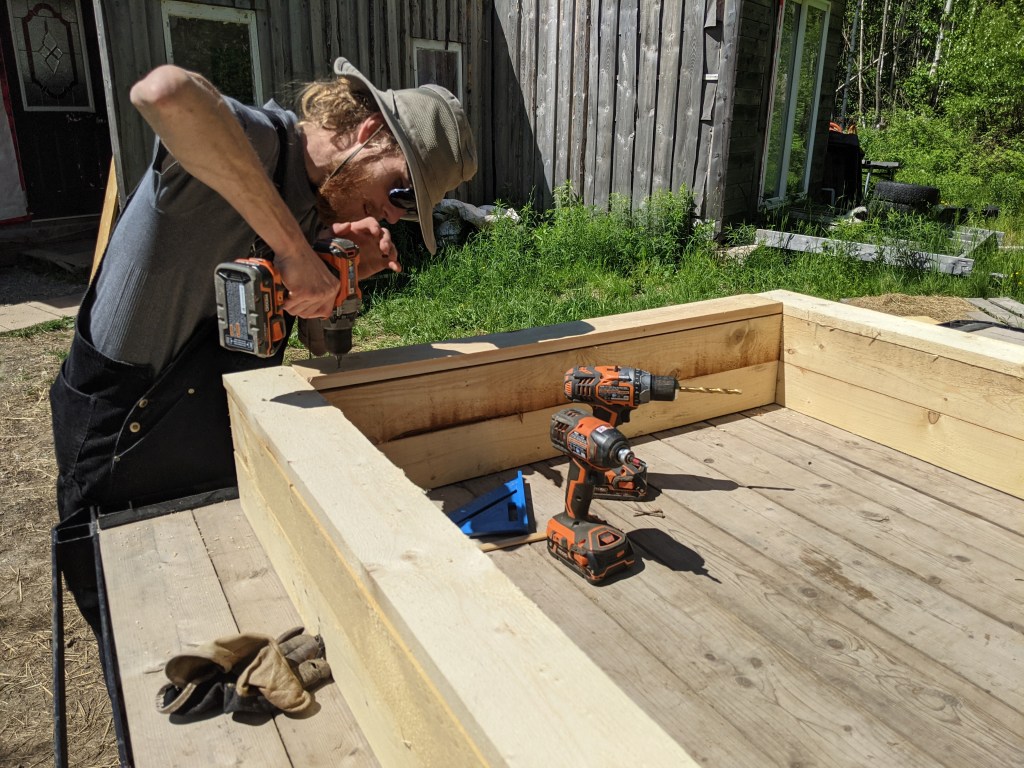
Building Projects from Logs Milled On-Site
The Experiential Learning Exchange
Homesteading is hard work. No other way to put it. You must be able to lift at least 50lbs and tolerate working in wind, rain, sun, black fly swarms, and whatever nature has to offer that day. Tending to life means a daily interaction with animals and vegetables alike, and they require food, water, care, and patience. The daily routines happen every day, twice a day no matter what, which means some things are the same day in and day out.
We are asking for your help with these tasks in exchange for all of the offerings mentioned. This will mean that in a week, you will contribute between 20 to 25 hours tending to the farm, which in turn sustains our human lives. You will partake in eating the food you are helping raise, thereby dieting with the land in a very intimate and real way.
Your energy will also contribute to the continued vision of this place and what you offer will pay it forward for others who will find their way to this land.
Meals
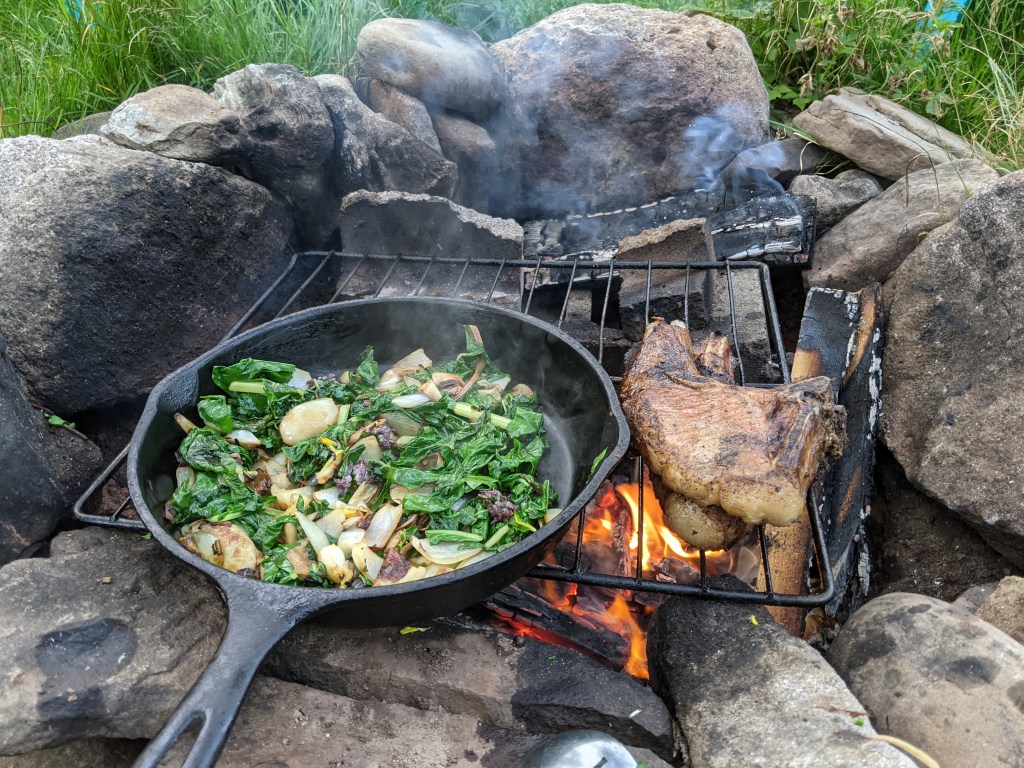
We eat whole foods, cooked from scratch that either come directly from the farm or other local farms. We eat what is in season and only have a few items that are not sourced from the Maritimes. Throughout the season, we also cook meals over an open fire, pairing those food with fresh greens from the garden which provide for an amazing compliment to this incredible food.
We provide the basics for three meals a day, with some prepared by us, others you cook for yourself. We do not provide snacks, tea or coffee, only the whole foods needed to prepare incredible home cooked meals. Please ensure that you bring food with you if you require additional nourishment. We cannot accommodate strict vegetarian or vegan diets as we cook with our own lard and many meals are meat-based. Our offering here is to eat locally, ethically raised food that comes directly from this land.
Accommodations and Facilities
Our volunteer accommodations and facilities at Twisted Roots Farm are situated in our forest site. These are rustic, simple camping style lodgings. All the amenities you will need are supplied for a comfortable stay, however, this a truly unique off-grid experience.
Our site and amenities include the following:
Rustic Cabin. For this season, we will have simple structures that allow for private accommodations in our forested site. These will provide shelter from the elements, protection from insects and offer a truly unique camping experience. We provide you with a cot, pillow and sleeping bag. You can also bring your own camping gear if that is preferable.
Washrooms. Washrooms consist of an outhouse in the woods with a composting toilet, which is simply a bucket with mulch. Volunteers will be required to empty these buckets in our humanure compost system, learning about this simple and efficient composting method. There is a hand-washing station located next to the washroom.
Showers. There is an outdoor shower available for volunteers, which is covered and screened. This is a bucket shower where volunteers can choose to warm the water first in the outdoor kitchen or enjoy a cold shower on a hot day.
Laundry. We do not have modern laundry facilities available for volunteers. We do however, provide a bucket system and plunger in which laundry can be washed by hand and hung to dry. This can be a labour intensive process depending on what you need to wash, however it is totally doable and really connects you with water usage and the cleaning of your clothing.
Kitchen. The kitchen is an outdoor style kitchen which is a covered screened building. It includes a propane stovetop for cooking, a table for eating meals, and a sink for dish cleanup. Volunteers will be required to haul their own water from the brook. Filtered drinking water will be supplied. There is no power in the kitchen and we have minimal refrigeration, which only consists of a cooler space with rotated ice packs.
Power and Devices. As mentioned, there is no power available in the main volunteer accommodation area. Power for charging devices can be accessed during designated hours. Please keep in mind that we work with little power and that there is no wifi and minimal cell service.
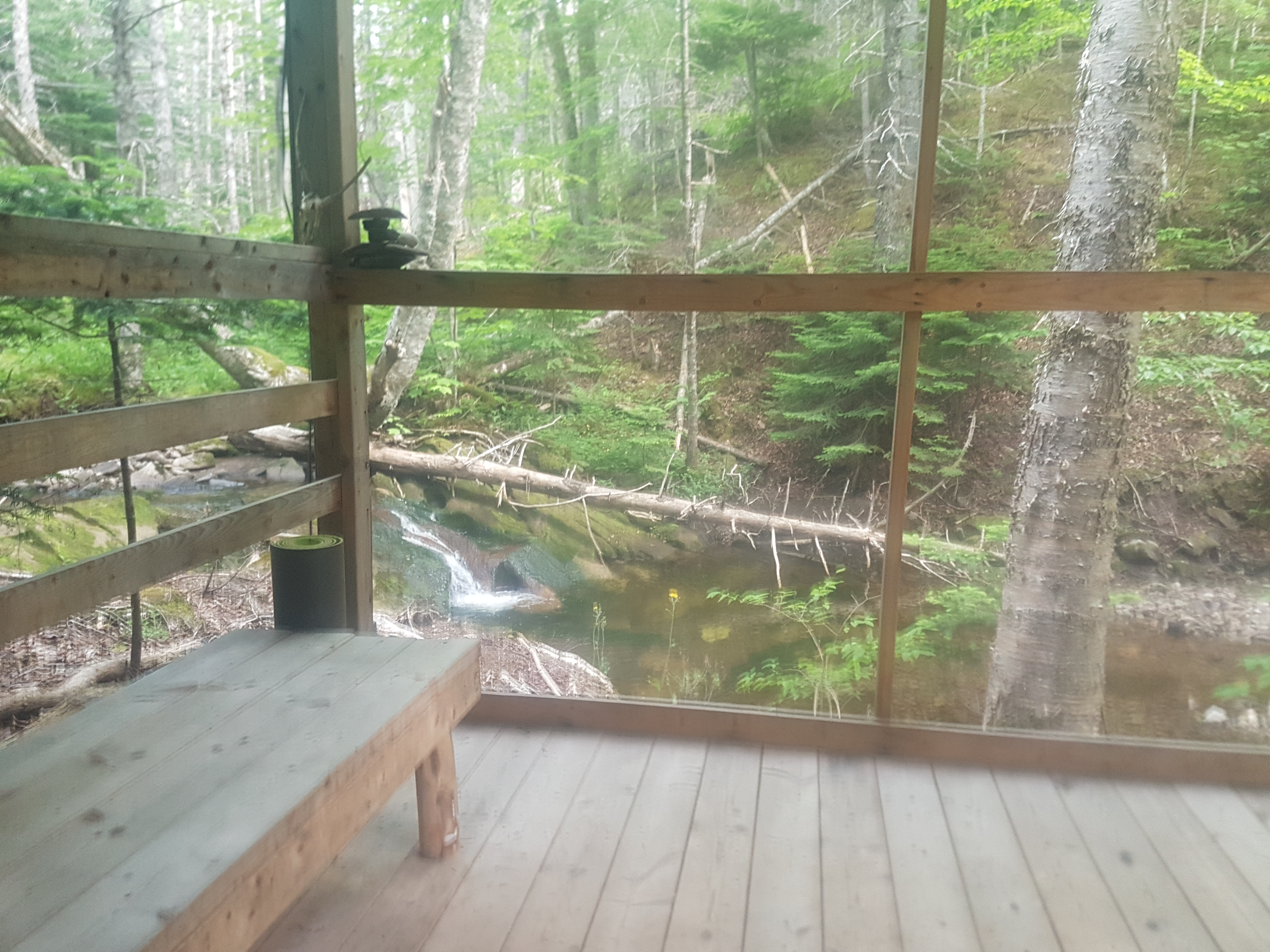
There is also a screened porch at the brook that is a bug free sanctuary in the forest. We use this area to hold meetings, play music and to enjoy hot summer days. We encourage volunteers to engage in daily practices, like yoga and meditation, and this magical place offers an amazing experience to be enjoyed during your time at the farm and in the forest. Our goal for the 2024 season is to build more brookside platforms that will provide additional areas for these activities. We also have walking trails on the property and many locations that can offer areas for sitting and enjoying the forest here at the farm.
Experiential Learning
Learning by doing. We encourage questions and suggest volunteers have a small notebook to take notes, as everything will be very new to you and you will be on a steep learning curve during your stay here. Any projects or tasks that we engage in will require explanation and demonstration. These can range from working on the bandsaw mill to milking a goat. We cover the basics of tool use and create opportunities for skill development through the various day to day projects that we complete as part of farm / forest life.
Experiential learning also extends to your daily living. You will learn how to use and manage a composting toilet, how to cook with whole foods, and understand the importance of minimal water and energy consumption.
We also provide a forum for discussion, either in our morning meetings where we discuss projects and or systems, or during meal times where we encourage questions and discussion on a variety of topics.
Outdoor Education
We are a farm in the forest, with the wild community making up the majority of land that is accessible here at Twisted Roots Farm. Our backgrounds in outdoor programming and education provide a natural offering for us as we weave farm and forest together. We encourage volunteers to spend time in the woods, walk the property, and spend time in nature.
Nature-based Mentoring and Reflection
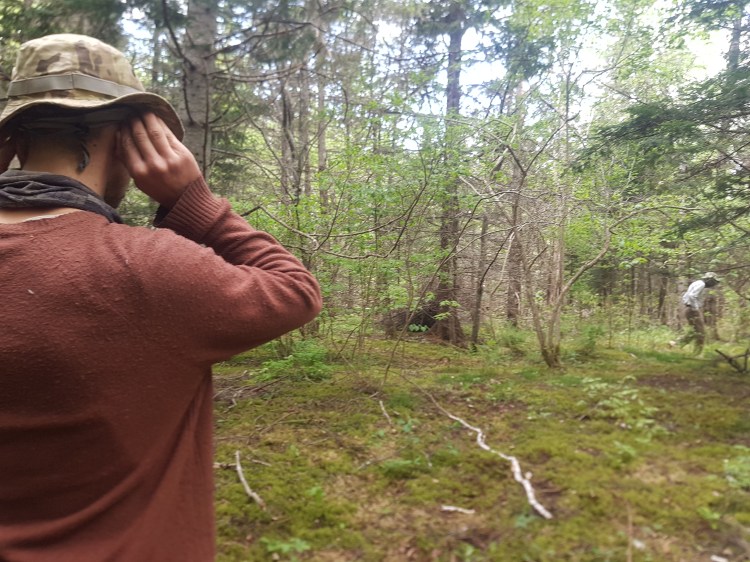
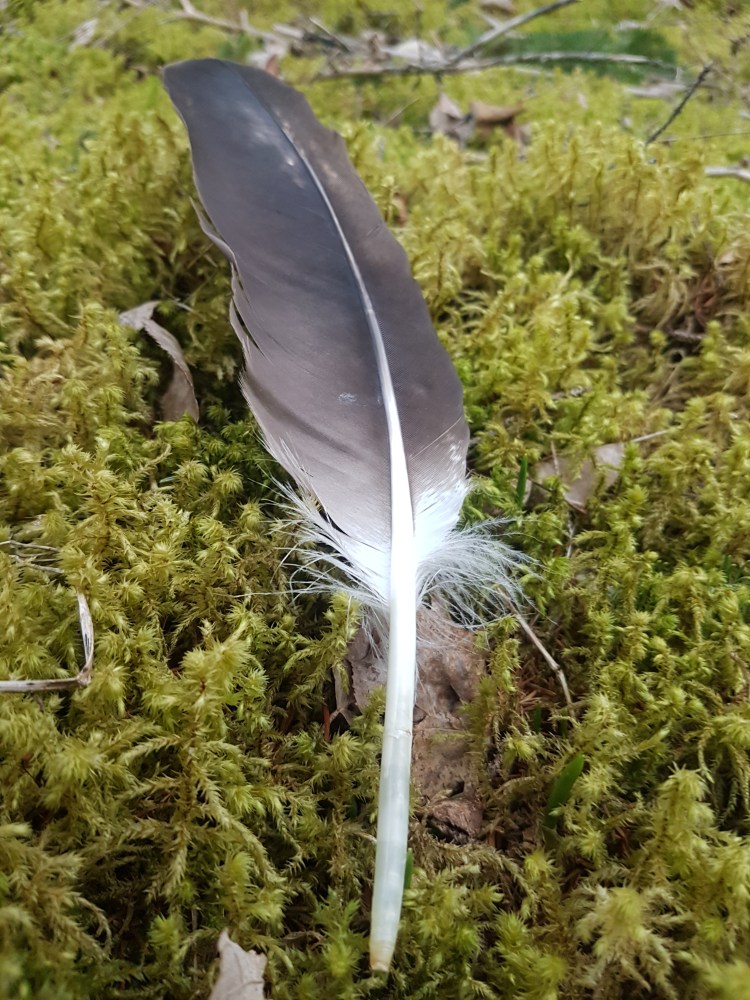
During your time here, our hope is that as you learn and tend to life on the farm, and be curious about the wild community that we are immersed in. Our approach is to offer ways to interact with the more-than-human community and from those interactions, we reflect what we hear which can provide powerful insights, metaphors, and imagery into aspects of your life that you may not have seen before. This is the power of spending mindful time in nature. Our work is based on various schools of thought, rooted in depth psychology. We resonate and have studied with the Animas Valley Institute, and use many nature-based practices developed by them.
As a core practice, we offer you to find a place on the property that you can visit each day, a sit spot, to observe and be in relationship with the wild community. From these interactions we begin to hear a story emerge and can offer other ways to explore these narratives within the wild community.
For more information on some of these nature-based philosophies, we recommend some of the following readings and websites:
- Animas Valley Institute, Bill Plotkin, Book: Soul Craft / Nature and the Human Soul / Wild Mind
- Martin Prechtel, Flowering Mountain, Book: The Unlikely Peace at Cuchamaquic
- Stephen Buhner, Plant Intelligence and the Imaginary Realm
Community Building
The learning also extends into the areas of community interaction and relationship building. You will be working hard and living with folks you would not have known prior to your arrival. Communication is very important. As a part of your time here, we introduce volunteers to Way of Council, which is a talking circle format that we use. This practice provides the space for active listening as well as a way to express ourselves in a supportive environment. For more information on council, you can visit the Ojai Foundation website or check out the book “The Way of Council” by Jack Zimmerman and Virginia Coyle.
The Farm Week
We like to welcome those looking to stay with us on Tuesdays or Wednesdays of any given week. This allows for an orientation of the farm and the ideal time for us to introduce you to the daily routines of the farm. We are somewhat flexible on arrival time and day, but this is what works best for us as we prepare for our busy time on the weekend.
We typically work with participants in the mornings during the week, especially in the summer when heat and humidity can make for challenging conditions.
Saturday & Sunday
We keep the schedule fluid on the weekend to accommodate the opening of the studio and the farm stand. We may also host workshops over the weekend, which is why we keep the weekend schedule more organic. Participants have the opportunity to participate in the various aspects of the weekend, which could include restocking the farm stand, participating in a hosted workshop, or being involved in the behind the scenes of how we interact with the larger community and create our economy from the homestead. During the weekend, we ask that participants prepare their own meals.
On Sunday, we wrap up the week with a gathering in the evening, including a potluck supper, where we can all share some food, music, and creativity and enjoy an evening together as we reflect and celebrate the week.
Monday
Monday is our day of rest on the homestead as we take our downtime, therefore we ask that participants be independent as we are not available. We recommend that you take this day to reflect deeply on the week, explore more of the forest, or connect with different aspects of the farm that speak to you. There are also many off-farm activities like beach walks, enjoying local music at the Celtic Music Interpretive Centre, or hiking along the Celtic Trail that connects the local communities.
Tuesday
Tuesday is departure day, and we begin the morning with a closing council to connect before we part ways after our week together. For those staying on for a second week or longer, this will be another day off after the conclusion of council.
Those on a two-week schedule will have a modified Wednesday if there is an arrival during this week. There will be more involvement in farm routines and continued project work. There are also more opportunities to develop core daily practices in nature connection, meditation, yoga, reflection, journaling, creativity or anything else that you are discovering during your stay.
For extended immersions, we provide opportunity for more personalized project work based on the intentions of the participant and the needs of the farm. We work with participants to identify creative projects that support learning while exploring your interests. These can include a wide range of activities that are available as a part of the day-to-day flow on the homestead.
How to Apply
Send us an email at info@twistedrootsfarm.ca with the dates you are thinking of and we will respond with availability. Maximum stay for volunteers is two weeks. For longer stays, we require an interview with participants to discuss a longer term visit.
 Twisted Roots Farm